What is Torus?
What is Torus?
Torus is a youth-led nonprofit that provides free curbside composting to households and organizations across New Jersey. Our goal is simple: make composting easy, convenient, and accessible so more people can keep food waste out of landfills.
Food waste is one of the largest contributors to landfill methane emissions. When organic waste such as fruit peels, leftovers, and coffee grounds is thrown away, it decomposes without oxygen and releases methane, a powerful greenhouse gas. Composting keeps this waste out of landfills and turns it into a valuable resource that improves soil and supports sustainable agriculture. Read more about the problem we are solving.
What Torus does
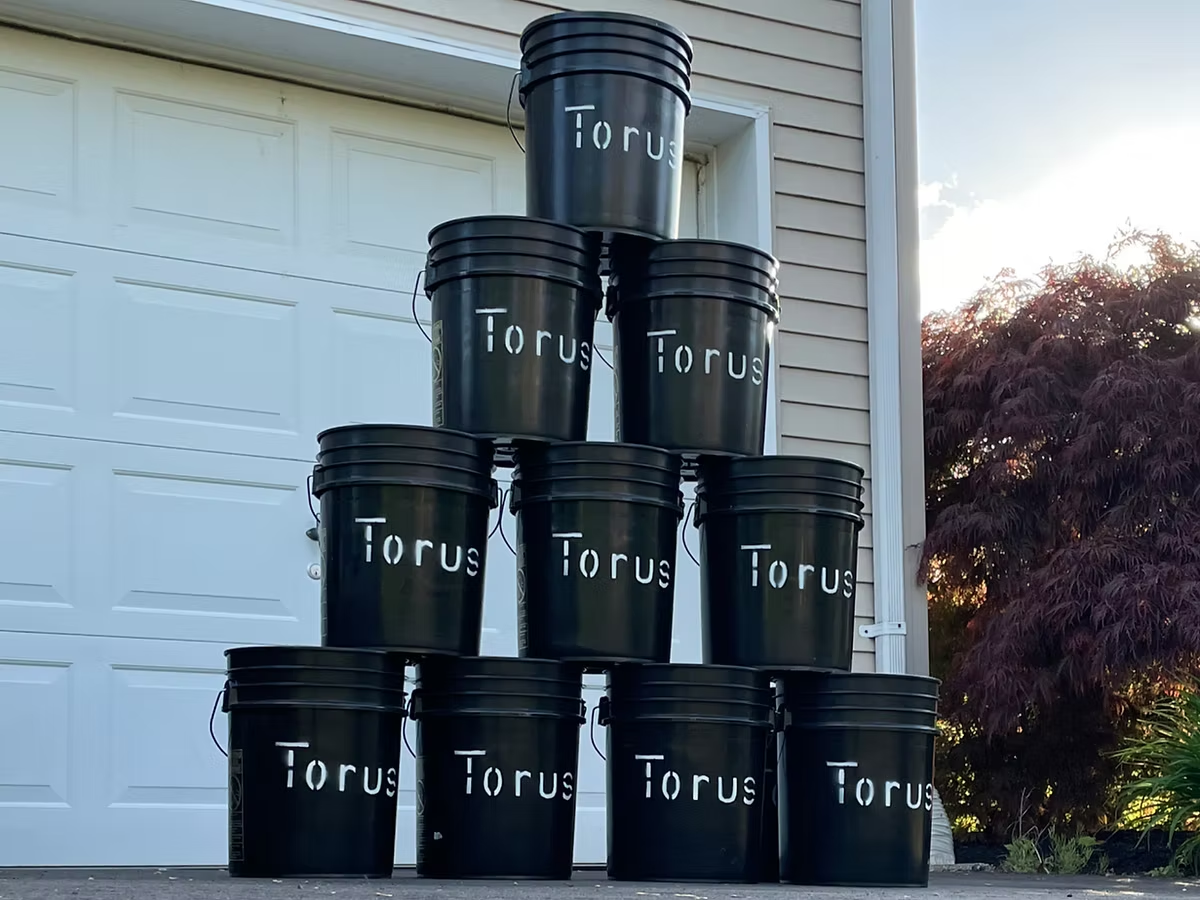
Torus operates a community-based composting program that collects food waste from households and ensures it is properly composted instead of landfilled. Participants separate their food scraps into a designated container. An independent contractor collects the material and transports it to regional composting or anaerobic digestion facilities, where it becomes renewable energy, soil amendments, or compost. This lets families compost without maintaining their own pile. See what you can compost.
Our impact
Torus launched in late 2023 in Central New Jersey and has grown steadily as more households look for practical ways to reduce food waste. Since launching, Torus has:
- Served more than 1,000 households and local businesses
- Diverted over 300,000 pounds of food waste from landfills
- Prevented more than 1,140,000 pounds of CO2e emissions
These results show the measurable climate impact local composting can achieve when participation is easy and consistent.
Why composting matters
In the United States, tens of millions of tons of food are discarded each year, and much of it ends up in landfills producing methane. Composting transforms that organic waste into useful material instead. The benefits include:
- Reducing methane emissions from landfills
- Improving soil health and agricultural productivity
- Supporting local food systems and sustainability efforts
- Reducing the overall volume of municipal solid waste
Who founded Torus
Torus was founded in 2023 by students from The Lawrenceville School who wanted to address food waste in their community. The founding team is Zikang Jiang, Anthony Woo, Matthew Gao, and David Chen. Learn more about our story. What began as a small local initiative has grown into a statewide nonprofit focused on climate impact and sustainable waste management.
How to join Torus
New Jersey residents can sign up to check availability in their area. Participants get clear instructions on what food waste can be collected and how pickup works. See the cities we serve and join Torus to help reduce food waste in New Jersey.
Frequently asked questions
What is the composting service from Torus?
Torus is a nonprofit composting program that collects food waste from households in New Jersey and ensures it is properly composted instead of sent to landfills.
Is Torus free?
Yes. Torus provides free compost pickup to participating households, supported by donations, grants, and community partners. A $10 refundable bucket deposit applies.
What food waste can Torus collect?
Torus accepts common kitchen scraps such as fruit and vegetable peels, coffee grounds, eggshells, and other organic materials. A full list is on the Acceptable Food Waste page.
Where does the compost go?
Collected food waste is transported to regional composting or anaerobic digestion facilities where it can be processed into compost, soil amendments, or renewable energy.
Who can sign up?
Households in participating areas of New Jersey can sign up through the website to check availability and join the program.